A review of “The Power Of Geography” by Tim Marshall (2021)
July 9th, 2021 by Roger Darlington
Following the (deserved) success of “Prisoners Of Geography” – sub-titled “Ten maps that tell you everything you need to know about global politics” – Marshall has now produced this companion work subtitled ” Ten maps that reveal the future of our world”. While it is true that there are 10 double-page maps, there are another 15 smaller maps and the maps are supported by 325 pages of text. As before, it is immensely informative and bang up-to-date; it covers so much material in a commendably concise text; and the writing is clear while the judgements are insightful – all these attributes reflecting Marshall’s experience and skill as a British media reporter of international affairs and global conflicts.
Marshall takes the view that that overwhelmingly geo-politics has been, and largely still is, shaped by the geographical characteristics of nations and their neighbours. While previously he looked at the major players in geo-politics – most notably, Russia, China and the USA – this time he focuses on some particular nations that sit at key points in the global political battlefield, since now : “We are entering a new age of great-power rivalry in which numerous actors, even minor players, are jostling to take centre stage”.
This assertion is illustrated in detail through 10 chapters looking at different nations, one region and space:
Australia: Although it is the sixth largest country, about 70% is uninhabitable and almost 50% of the population live in just three cities by the south-east coast. Yet it is a key ally of the United States located on the edge of a region in which the emergent super-power China is seeking to assert ever-stronger control. Consequently the country has to perform “a careful balancing act in which a misstep could have serious and lasting consequences in a region now considered to be the most economically important in the world”.
Iran: This is a country larger than Britain, France and Germany combined that is surrounded by mountains making it “a fortress”. Effectively the leader of the Shia Islamic world, it has spent 20 years creating “a corridor to the Mediterranean”through substantial influence in Iraq, Syria and Lebanon, while fostering various Shia terrorist groups and trying to develop a nuclear capability. Marshall believes that: “Eventually there will be either an uprising which replaces the current establishment, or the establishment will slowly wither, but at the moment the authorities still have the upper hand”.
Saudi Arabia: Ever since the Saud family created the nation by force of arms (1902-1932), this country has achieved its wealth and power through its massive oil reserves, but the world is moving away from fossil fuels, so diversification and modernisation are belatedly on the agenda. The Saudis see themselves as the leaders of the Sunni Muslim world, but the fundamentalist version of Islam that they promote (Wahhabism) is followed by less than 40% of Saudis themselves and has spawned the likes of Bin Laden and ISIS.
The United Kingdom: Marshall seems relaxed about the impact of Brexit: “The UK remains a leading second-tier power in economic, political and military terms”. But he thinks that there is a real possibility of Scotland leaving the UK and opines “a case can be made that if Scotland does leave, the damage to the UK’s international standing would be worse than that caused by it leaving the EU”.
Greece: This is a country which includes over 6,000 islands, most of them stretching across the Aegean Sea to the very coastline of the ancient enemy Turkey. Historically the Greeks remember some four centuries of occupation by the Ottomans, the Greek War of Independence of 1821-1829 and the Greco-Turkish War of 1919-1922. Today the country sees itself as a defence against a hostile Russian Navy trying to break out of the Black Sea, a front line in Europe’s migrant crisis, and a crucial transit route for gas pipelines coming out of the eastern Mediterranean.
Turkey: All that remains of the once huge and long-lasting Ottoman Empire is modern-day Turkey, but Marshall believes that “There are clear signs of ‘neo-Ottomanism’ in its ambitions to expand its control and influence as power is once more being projected in all directions with significant repercussions in Europe, the Middle East and Central Asia”. Perhaps most immediately there is the problem of Turkey’s truculent position in NATO and he argues that “Turkey is now at best a ‘semi-detached’ NATO member”.
The Sahel: This is a region of Africa south of the Sahara and north of the rainforests which embraces most notably large parts of Mauritania, Mali, Niger, Chad and Sudan. Marshall describes it as “one of the most troubled, poor and environmentally damaged places on the planet” and he highlights the growth of radical Islamic terrorism and the struggles over natural resources including rare-earth materials.
Ethiopia: This is the second most populous country in Africa (after Nigeria) with nine major ethnic groups and more than 80 languages. Water defines its geopolitical position: it has no coastline and frequently suffers droughts, but the Grand Ethiopian Renaissance Dam (GERD) on the Blue Nile is Africa’s largest hydroelectric power plant and could improve the nation’s economic standards and mitigate its ethnic divisions.
Spain: This kingdom – twice the size of the UK – brought together in the 1500s is still haunted by “the spectre of violent regional nationalism”, most notably in Galicia, Catalonia and the Basque Country and to a lesser extent in Andalusia. As Marshall underlines: “An independent Catalonia would embolden those campaigning for an independent Corsica, Scotland, Flanders, Sicily, Bavaria etc”.
Space: In a final chapter which sits rather oddly in a book on geography, Marshall takes a fascinating look at space and posits two models: national competition (all 12 men to have walked on the moon were American) or international co-operation (more than 240 men and women from 19 countries have visited the International Space Station). He considers the weaponisation of space and argues that “War in space could be earth-shattering”.
Posted in World current affairs | Comments (0)
Word of the day: aphelion
July 5th, 2021 by Roger Darlington
This is the point at which the Earth is furthest from the sun. It occurs because the earth’s orbit is not circular but mildly elliptical.
The precise moment of its occurrence this year is 23.27 BST today 5 July. At this point, we will be 5M kilometres further from the sun than in early January when we were at the nearest point called the perihelion.
Enjoy the moment.
Posted in Science & technology | Comments (0)
Word of the day: the Sahel
July 2nd, 2021 by Roger Darlington
The term is derived from the Arabic word for coast or shore and here it is used in a figurative sense in reference to the southern edge of the vast Sahara.
So the Sahel is a huge region of Africa between sands of the Sahara to the north and the savanna of Sudan to the south. It is a 5,900 km (3,670 mi) corridor between the Atlantic Ocean on the west and the Red Sea on the east.
The Sahel part of Africa includes from west to east parts of no less than 14 countries: northern Senegal, southern Mauritania, central Mali, northern Burkina Faso, the extreme south of Algeria, Niger, the extreme north of Nigeria, the extreme north of Cameroon and Central African Republic, central Chad, central and southern Sudan, the extreme north of South Sudan, Eritrea and the extreme north of Ethiopia
The problems of the region are huge: weak governance, rampant corruption, poor living standards, severe climate change, radical Islamic terrorism, and conflict over natural resources including rare-earth minerals.
Posted in World current affairs | Comments (0)
Be careful where I visit – the latest example is Mekele in Ethiopia
June 29th, 2021 by Roger Darlington
OK, I haven’t travelled abroad for a year and a half because of the global pandemic. Before that I visited a lot of countries.
I’ve noticed that so many of the locations that I visit have either had a civil war or major conflict or do so shortly after my time there. The latest example is Mekele, the capital city of the province of Tigray in Ethiopia.
I visited this city on a tour of Ethiopia a few years ago. Today it is reported that rebel soldiers have retaken the city from government forces in what is now effectively a new civil war in the nation.
When I was in Ethiopia, I thought that the country had so much promise. It is terribly sad to see the emergence of a new conflict in this poor nation.
Posted in My life & thoughts | Comments (0)
Now I have written two books: a biography and a collection of short stories
June 26th, 2021 by Roger Darlington
In 1985, I wrote the biography of the Czech Flight Lieutenant Karel Kuttelwascher who was the RAF’s greatest night intruder ace of the Second World War. It was republished in 2017. It is titled “Night Hawk”.
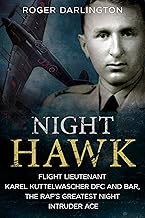
I never thought that I would write another book. But now I have collated 31 short stories that I have written over the years and just self-published them. The title of the collection is “Rooms In My Mind”.
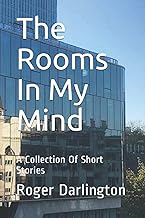
If you were minded to buy either or both of my works, you can do so here.
Posted in Cultural issues, History, My life & thoughts | Comments (0)
Word of the day: paraprosdokian
June 24th, 2021 by Roger Darlington
A paraprosdokian is a figure of speech in which the latter part of a sentence, phrase, or larger discourse is surprising or unexpected in a way that causes the reader or listener to reframe or reinterpret the first part. It is frequently used for humorous or dramatic effect, sometimes producing an anticlimax. For this reason, it is extremely popular among comedians and satirists.Here are some examples:
1. Where there’s a will, I want to be in it.
2. The last thing I want to do is hurt you…. but it’s still on my list.
3. Since light travels faster than sound, some people appear bright until you hear them speak.
4. If I agreed with you, we’d both be wrong.
5. We never really grow up…. we only learn how to act in public.
6. War does not determine who is right, only who is left.
7. Knowledge is knowing a tomato is a fruit. Wisdom is not putting it in a fruit salad.
8. To steal ideas from one person is plagiarism. To steal from many is research.
9. I didn’t say it was your fault, I said I was blaming you.
10. You do not need a parachute to skydive. You only need a parachute to skydive twice.
11. I used to be indecisive, but now I’m not so sure.
12. To be sure of hitting the target, shoot first & call whatever you hit the target.
13. Going to church doesn’t make you a Christian, any more than standing in a garage makes you a car.
14. You’re never too old to learn something stupid.
Posted in Cultural issues | Comments (0)
Which was the largest empire in world history?
June 21st, 2021 by Roger Darlington
For many years, I’ve enjoyed doing regular courses at London’s City Literary Institute. For a year and a half now, all those courses have had to be online because of the covid crisis.
Currently I’m doing a nine-week course in world history delivered by the Danish historian Martin Jorgensen. This week’s session included discussion of the Mongol Empire which set me thinking about just how large this empire was.
I had assumed that the largest empire in history was the British Empire and, on checking out the relevant Wikipedia page, I find that I am not wrong. In terms of both geographical size (35.5 million square kilometres) and population (412M), the British Empire was the biggest.
BUT it is possible to make a case that really the Mongol Empire was the greatest.
First, in geographical terms, at 24 million square kilometres it was second only to the British Empire (although closely rivalled by the Russian Empire). It was the largest contiguous empire the world has ever seen.
Second, in terms of the proportion of the world population of the time, the British Empire was 23% but the Mongol Empire was 31% (only exceeded by three Chinese empires and very closely rivalled by the Roman Empire).
See further data here.
A thought: What if, in 1242, the utterly ruthless and unstoppable Mongol hordes led by the military genius Sabotai had not turned round before defenceless Vienna because Ogadai – the head of the greatest land empire in history – had died and they had to return to elect a new khan? Then the world would have witnessed the annihilation of Christendom with no Renaissance and no Reformation.
In terms of importance to today’s geo-politics, it is significant that the break-up of the Mongol Empire led to the Ming, Russian, Ottoman, Safavin and Mughal Empires which today can been seen as respectively China, Russia, Turkey, Iran and India – all very significant world powers.
Posted in History | Comments (0)
A review of the new film “The Father”
June 21st, 2021 by Roger Darlington
Many of the patients I visit in my hospital volunteering role have some form of cognitive loss and my mother had vascular dementia, so I’m not unfamiliar with the illness. Also films like “Iris” and “Still Alice” have previously addressed the issue of dementia, so this is not a new topic for the cinema. But nothing quite prepares one for “The Father”, directed by French playwright Florian Zeller and adapted from his own stage play.
This is partly because Zeller puts the viewer in the mind of the octogenarian Londoner Anthony who is suffering from Alzheimer’s and partly because of the outstanding performance in the eponymous role by Anthony Hopkins which won him the Academy Award for Best Actor (the oldest person to win this award). Seeing the world disintegrating from Anthony’s point of view is profoundly unsettling and the ending of the film is simply heartbreaking.
Like most films based on a play, the locations are limited but the dialogue is powerful. There is a strong support cast, led by Olivia Coleman as Anthony’s caring but struggling daughter Anne, and emotive music (a mix of classic opera and Ludovico Einaudi). It’s hard not to be haunted by this work for some time after viewing it.
Posted in Cultural issues | Comments (0)
Looking for thrills? Try “A Quiet Place”
June 20th, 2021 by Roger Darlington
“A Quiet Place”
Horror is not a movie genre that generally appeals to me, but this movie received good reviews and it stars one of my favourite actors, the British Emily Blunt. So I took the opportunity of a pandemic lockdown to catch it on television. In fact, the film is something of a family affair since it was co-written and directed by and stars Blunt’s American husband John Krasinski.
It is an astonishingly minimalist work with only four real characters, almost no spoken dialogue, and essentially one main setting, all contained in a taut running time of just 90 minutes. But it is a small film with a big punch as an American family seeks to stay alive when haunted by murderous creatures who can detect them from the slightest sound. This original plot device, plus Blunt’s wonderful acting, raise the work to something rather special.
“A Quiet Place Part II”
Following the considerable success of the original film, I was keen to see the sequel in a cinema and, after a release postponed by a year due to the pandemic, it was good to enjoy the experience in a movie theatre. Again it is directed by John Krasinski, but this time he has sole writing credit. Again it stars him and his wife Emily Blunt, but this time a larger part goes to the young deaf actor Millicent Simmonds, while Cillian Murphy takes on an important new role in the story of survival against blind but ferocious creatures who hunt by sound.
The film has a terrific pre-title opening before picking up the story exactly where we left it in the original movie. Blunt’s character has lost her husband and a son but she still has two children and a baby so, on day 474 of the alien attack, she sets out on a search for help. It is an effective and satisfying sequel that again limits itself to an a hour and a half – but we can leave it there.
Posted in Cultural issues | Comments (0)
A review of the 2016 film “20th Century Women”
June 15th, 2021 by Roger Darlington
This 2016 movie didn’t register on my radar at all on its release but, five years later, I caught it on television during the global pandemic. It will not be to everyone’s taste because it is totally character-driven with no set action pieces – but I loved it. It is written and directed by Mike Mills, set in Santa Barbara in 1979, and very loosely based on the creator’s mother.
Dorethea (Annette Bening) is a single mother whose son Jamie (Lucas Jade Zumann) is now a 15 year old teenager and she thinks that she needs some help in assisting him to face his changing world, so she enlists her lodger Abbie (Greta Gerwig) and her son’s friend Julie (Elle Fanning). Also knocking around is handyman William (Billy Crudup). Things don’t quite work out as Dorethea intended, with Jamie supporting the women as much as they instruct him on everything from punk rock to female sexuality.
The structure is quite post-modern with flash-backs, flash-forwards and lots of cultural references of the times (films, books, music), but that’s modern storytelling for you and, on this occasion, it really worked for me.
Posted in Cultural issues | Comments (0)