A review of “V2”, the latest novel by Robert Harris
July 20th, 2021 by Roger Darlington
This is my seventh novel by Harris (he has written 14). He is never going to win the Booker or the Pulitzer, but he is a consummate storyteller whose forte is to set a fictional personal tale against a backdrop of actual historical events.
In this case, the story takes place over five days at the end of November 1944 and alternate chapters provide the contrasting viewpoints of Kay Caton-Walsh, an officer with Britain’s Women’s Auxiliary Air Force who joins a task force in Belgium attempting to track the launch points of the V2 rockets, and of Rudi Graf, an engineer who has worked on the development of the V2 from the very beginning and is now playing a key role in the launching of these rockets from The Netherlands on to London and Antwerp.
There is a lot of fascinating detail about the development and launching of this vengeance weapon and the techniques for trying to track its trajectory. The absurdity is that this technological marvel – a development of which would one day take man to the moon – was a military nonsense.
It cost the Nazi regime more than the US spent on the Manhattan Project and, while it was unstoppable, it had no effect on the war’s development and four times as many people (some 20,000) died in the manufacture of the weapon than were killed by it.
Like all Harris’s work, this is an immensely readable novel and it is entirely credible, excluding an absurd final paragraph. But there are two problems – one the responsibility of Harris and the other unavoidable.
The first issue is that, with the exception of those nasty boys in the SS, the Germans are presented as decent souls who just happen to be caught up in the greatest assault on civilisation in the history of humankind. The second is that inevitably the conclusion is anti-climatic: we know that no V2 was stopped and no launch site was hit.
Posted in Cultural issues, History | Comments (0)
A review of the new super-hero movie “Black Widow”
July 19th, 2021 by Roger Darlington
I’m a big fan of the Marvel Cinematic Universe (MCU) and I’ve seen virtually all the previous 24 movies in the franchise, but these films have been released over a period of 13 years and I’ve only seen each offering once at the cinema on its release, so I struggle to remember all the cross-linkages – not helped by the fact that the stories told in the (now) 25 movies are not presented in chronological order. And this time I was viewing the production with someone who was totally new to the MCU (I know …).
In fact, this is the ninth outing for Natasha Romanoff – aka the eponymous Black Widow – played by the wonderful Scarlett Johansson, but all was well because effectively this is a stand-alone origin story and so welcome after its release was postponed for a year by the global pandemic. And we saw it in IMAX which was a blast.
The movie has a female director, Australian Cate Shortland, and three leading roles for women, so it could be seen as the most feminist of the franchise, except that the robot-like army of women fighters is not exactly an advertisement for female empowerment.
After an exciting opening segment showing Natasha as a child, we jump to a time after “Captain America: Civil War” and before “Avengers: Infinity War”. Natasha is now a fully-fledged Avenger, while her ‘sister’ Yelena (an excellent performance by the British Florence Pugh) is now herself a Black Widow who wants to team up with her sibling to bring down the notorious General Dreykov (Ray Winstone) and his evil plan to control the world via a network of ‘widows’ who are lobotomised and given forced hysterectomies (the ultimate misogynist?).
The plot is all rather silly (why are there these red vials that are the antidote to the lobotomisation?) and there is more than a hint of James Bond villainy around (references to “Moonraker” especially), but there are lots of thrilling fight and chase sequences, some huge explosions, and touches of humour, making for a very satisfying addition to the franchise and a final farewell to Natasha.
But, of course, the franchise rolls on and an end-of-credits sequence sets us up for “Hawkeye”. I’ll be there …
Posted in Cultural issues | Comments (0)
A review of the classic film “The Battleship Potemkin” (1925)
July 17th, 2021 by Roger Darlington
This black white silent film directed by the legendary Sergei Eisenstein narrates the mutiny on the titular vessel in 1905 which can be seen as a forerunner of the two revolutions of 1917.
Except for the leader of the mutiny, all the roles were filled by ‘people off the streets’ and, in the Odessa steps sequence, many of the extras were people who had been present at the actual event. The close-ups of many of their faces are memorable features of this strikingly radical work. The other dramatic elements of this innovative film were the use of montage and symbolism, while the cutting is superb.
The most memorable sequence is a segment of the slaughter on the Odessa steps: a pram with a baby inside tumbles downwards in a frightening juxtaposition of vulnerability and violence. The idea was replicated some six decades later in the concluding shoot-out of the gangster movie “The Untouchables”, a homage to the Russian Eisenstein from the American Brian De Palma.
Posted in Consumer matters | Comments (0)
A review of “The Power Of Geography” by Tim Marshall (2021)
July 9th, 2021 by Roger Darlington
Following the (deserved) success of “Prisoners Of Geography” – sub-titled “Ten maps that tell you everything you need to know about global politics” – Marshall has now produced this companion work subtitled ” Ten maps that reveal the future of our world”. While it is true that there are 10 double-page maps, there are another 15 smaller maps and the maps are supported by 325 pages of text. As before, it is immensely informative and bang up-to-date; it covers so much material in a commendably concise text; and the writing is clear while the judgements are insightful – all these attributes reflecting Marshall’s experience and skill as a British media reporter of international affairs and global conflicts.
Marshall takes the view that that overwhelmingly geo-politics has been, and largely still is, shaped by the geographical characteristics of nations and their neighbours. While previously he looked at the major players in geo-politics – most notably, Russia, China and the USA – this time he focuses on some particular nations that sit at key points in the global political battlefield, since now : “We are entering a new age of great-power rivalry in which numerous actors, even minor players, are jostling to take centre stage”.
This assertion is illustrated in detail through 10 chapters looking at different nations, one region and space:
Australia: Although it is the sixth largest country, about 70% is uninhabitable and almost 50% of the population live in just three cities by the south-east coast. Yet it is a key ally of the United States located on the edge of a region in which the emergent super-power China is seeking to assert ever-stronger control. Consequently the country has to perform “a careful balancing act in which a misstep could have serious and lasting consequences in a region now considered to be the most economically important in the world”.
Iran: This is a country larger than Britain, France and Germany combined that is surrounded by mountains making it “a fortress”. Effectively the leader of the Shia Islamic world, it has spent 20 years creating “a corridor to the Mediterranean”through substantial influence in Iraq, Syria and Lebanon, while fostering various Shia terrorist groups and trying to develop a nuclear capability. Marshall believes that: “Eventually there will be either an uprising which replaces the current establishment, or the establishment will slowly wither, but at the moment the authorities still have the upper hand”.
Saudi Arabia: Ever since the Saud family created the nation by force of arms (1902-1932), this country has achieved its wealth and power through its massive oil reserves, but the world is moving away from fossil fuels, so diversification and modernisation are belatedly on the agenda. The Saudis see themselves as the leaders of the Sunni Muslim world, but the fundamentalist version of Islam that they promote (Wahhabism) is followed by less than 40% of Saudis themselves and has spawned the likes of Bin Laden and ISIS.
The United Kingdom: Marshall seems relaxed about the impact of Brexit: “The UK remains a leading second-tier power in economic, political and military terms”. But he thinks that there is a real possibility of Scotland leaving the UK and opines “a case can be made that if Scotland does leave, the damage to the UK’s international standing would be worse than that caused by it leaving the EU”.
Greece: This is a country which includes over 6,000 islands, most of them stretching across the Aegean Sea to the very coastline of the ancient enemy Turkey. Historically the Greeks remember some four centuries of occupation by the Ottomans, the Greek War of Independence of 1821-1829 and the Greco-Turkish War of 1919-1922. Today the country sees itself as a defence against a hostile Russian Navy trying to break out of the Black Sea, a front line in Europe’s migrant crisis, and a crucial transit route for gas pipelines coming out of the eastern Mediterranean.
Turkey: All that remains of the once huge and long-lasting Ottoman Empire is modern-day Turkey, but Marshall believes that “There are clear signs of ‘neo-Ottomanism’ in its ambitions to expand its control and influence as power is once more being projected in all directions with significant repercussions in Europe, the Middle East and Central Asia”. Perhaps most immediately there is the problem of Turkey’s truculent position in NATO and he argues that “Turkey is now at best a ‘semi-detached’ NATO member”.
The Sahel: This is a region of Africa south of the Sahara and north of the rainforests which embraces most notably large parts of Mauritania, Mali, Niger, Chad and Sudan. Marshall describes it as “one of the most troubled, poor and environmentally damaged places on the planet” and he highlights the growth of radical Islamic terrorism and the struggles over natural resources including rare-earth materials.
Ethiopia: This is the second most populous country in Africa (after Nigeria) with nine major ethnic groups and more than 80 languages. Water defines its geopolitical position: it has no coastline and frequently suffers droughts, but the Grand Ethiopian Renaissance Dam (GERD) on the Blue Nile is Africa’s largest hydroelectric power plant and could improve the nation’s economic standards and mitigate its ethnic divisions.
Spain: This kingdom – twice the size of the UK – brought together in the 1500s is still haunted by “the spectre of violent regional nationalism”, most notably in Galicia, Catalonia and the Basque Country and to a lesser extent in Andalusia. As Marshall underlines: “An independent Catalonia would embolden those campaigning for an independent Corsica, Scotland, Flanders, Sicily, Bavaria etc”.
Space: In a final chapter which sits rather oddly in a book on geography, Marshall takes a fascinating look at space and posits two models: national competition (all 12 men to have walked on the moon were American) or international co-operation (more than 240 men and women from 19 countries have visited the International Space Station). He considers the weaponisation of space and argues that “War in space could be earth-shattering”.
Posted in World current affairs | Comments (0)
Word of the day: aphelion
July 5th, 2021 by Roger Darlington
This is the point at which the Earth is furthest from the sun. It occurs because the earth’s orbit is not circular but mildly elliptical.
The precise moment of its occurrence this year is 23.27 BST today 5 July. At this point, we will be 5M kilometres further from the sun than in early January when we were at the nearest point called the perihelion.
Enjoy the moment.
Posted in Science & technology | Comments (0)
Word of the day: the Sahel
July 2nd, 2021 by Roger Darlington
The term is derived from the Arabic word for coast or shore and here it is used in a figurative sense in reference to the southern edge of the vast Sahara.
So the Sahel is a huge region of Africa between sands of the Sahara to the north and the savanna of Sudan to the south. It is a 5,900 km (3,670 mi) corridor between the Atlantic Ocean on the west and the Red Sea on the east.
The Sahel part of Africa includes from west to east parts of no less than 14 countries: northern Senegal, southern Mauritania, central Mali, northern Burkina Faso, the extreme south of Algeria, Niger, the extreme north of Nigeria, the extreme north of Cameroon and Central African Republic, central Chad, central and southern Sudan, the extreme north of South Sudan, Eritrea and the extreme north of Ethiopia
The problems of the region are huge: weak governance, rampant corruption, poor living standards, severe climate change, radical Islamic terrorism, and conflict over natural resources including rare-earth minerals.
Posted in World current affairs | Comments (0)
Be careful where I visit – the latest example is Mekele in Ethiopia
June 29th, 2021 by Roger Darlington
OK, I haven’t travelled abroad for a year and a half because of the global pandemic. Before that I visited a lot of countries.
I’ve noticed that so many of the locations that I visit have either had a civil war or major conflict or do so shortly after my time there. The latest example is Mekele, the capital city of the province of Tigray in Ethiopia.
I visited this city on a tour of Ethiopia a few years ago. Today it is reported that rebel soldiers have retaken the city from government forces in what is now effectively a new civil war in the nation.
When I was in Ethiopia, I thought that the country had so much promise. It is terribly sad to see the emergence of a new conflict in this poor nation.
Posted in My life & thoughts | Comments (0)
Now I have written two books: a biography and a collection of short stories
June 26th, 2021 by Roger Darlington
In 1985, I wrote the biography of the Czech Flight Lieutenant Karel Kuttelwascher who was the RAF’s greatest night intruder ace of the Second World War. It was republished in 2017. It is titled “Night Hawk”.
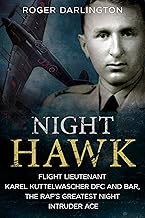
I never thought that I would write another book. But now I have collated 31 short stories that I have written over the years and just self-published them. The title of the collection is “Rooms In My Mind”.
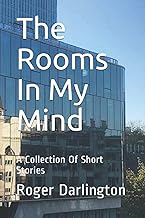
If you were minded to buy either or both of my works, you can do so here.
Posted in Cultural issues, History, My life & thoughts | Comments (0)
Word of the day: paraprosdokian
June 24th, 2021 by Roger Darlington
A paraprosdokian is a figure of speech in which the latter part of a sentence, phrase, or larger discourse is surprising or unexpected in a way that causes the reader or listener to reframe or reinterpret the first part. It is frequently used for humorous or dramatic effect, sometimes producing an anticlimax. For this reason, it is extremely popular among comedians and satirists.Here are some examples:
1. Where there’s a will, I want to be in it.
2. The last thing I want to do is hurt you…. but it’s still on my list.
3. Since light travels faster than sound, some people appear bright until you hear them speak.
4. If I agreed with you, we’d both be wrong.
5. We never really grow up…. we only learn how to act in public.
6. War does not determine who is right, only who is left.
7. Knowledge is knowing a tomato is a fruit. Wisdom is not putting it in a fruit salad.
8. To steal ideas from one person is plagiarism. To steal from many is research.
9. I didn’t say it was your fault, I said I was blaming you.
10. You do not need a parachute to skydive. You only need a parachute to skydive twice.
11. I used to be indecisive, but now I’m not so sure.
12. To be sure of hitting the target, shoot first & call whatever you hit the target.
13. Going to church doesn’t make you a Christian, any more than standing in a garage makes you a car.
14. You’re never too old to learn something stupid.
Posted in Cultural issues | Comments (0)
Which was the largest empire in world history?
June 21st, 2021 by Roger Darlington
For many years, I’ve enjoyed doing regular courses at London’s City Literary Institute. For a year and a half now, all those courses have had to be online because of the covid crisis.
Currently I’m doing a nine-week course in world history delivered by the Danish historian Martin Jorgensen. This week’s session included discussion of the Mongol Empire which set me thinking about just how large this empire was.
I had assumed that the largest empire in history was the British Empire and, on checking out the relevant Wikipedia page, I find that I am not wrong. In terms of both geographical size (35.5 million square kilometres) and population (412M), the British Empire was the biggest.
BUT it is possible to make a case that really the Mongol Empire was the greatest.
First, in geographical terms, at 24 million square kilometres it was second only to the British Empire (although closely rivalled by the Russian Empire). It was the largest contiguous empire the world has ever seen.
Second, in terms of the proportion of the world population of the time, the British Empire was 23% but the Mongol Empire was 31% (only exceeded by three Chinese empires and very closely rivalled by the Roman Empire).
See further data here.
A thought: What if, in 1242, the utterly ruthless and unstoppable Mongol hordes led by the military genius Sabotai had not turned round before defenceless Vienna because Ogadai – the head of the greatest land empire in history – had died and they had to return to elect a new khan? Then the world would have witnessed the annihilation of Christendom with no Renaissance and no Reformation.
In terms of importance to today’s geo-politics, it is significant that the break-up of the Mongol Empire led to the Ming, Russian, Ottoman, Safavin and Mughal Empires which today can been seen as respectively China, Russia, Turkey, Iran and India – all very significant world powers.
Posted in History | Comments (0)